"Do I need a guard on site, or will patrols do?" is one of the first questions a site owner asks. The honest answer is that it depends on three things: what you are protecting, when it is most exposed, and what happens if something goes wrong while nobody is watching. This guide compares both options side by side so you can make that call with confidence.
The short answer: a static guard stays on your site for the whole shift and is best when you need constant presence, access control or an immediate response. A mobile patrol visits several sites at random or scheduled times and is best when good fencing, lighting and an alarm do most of the work and you need someone to check, lock up and respond. Many sites get the best value from a mix of both.
What is the difference between a static guard and a mobile patrol?
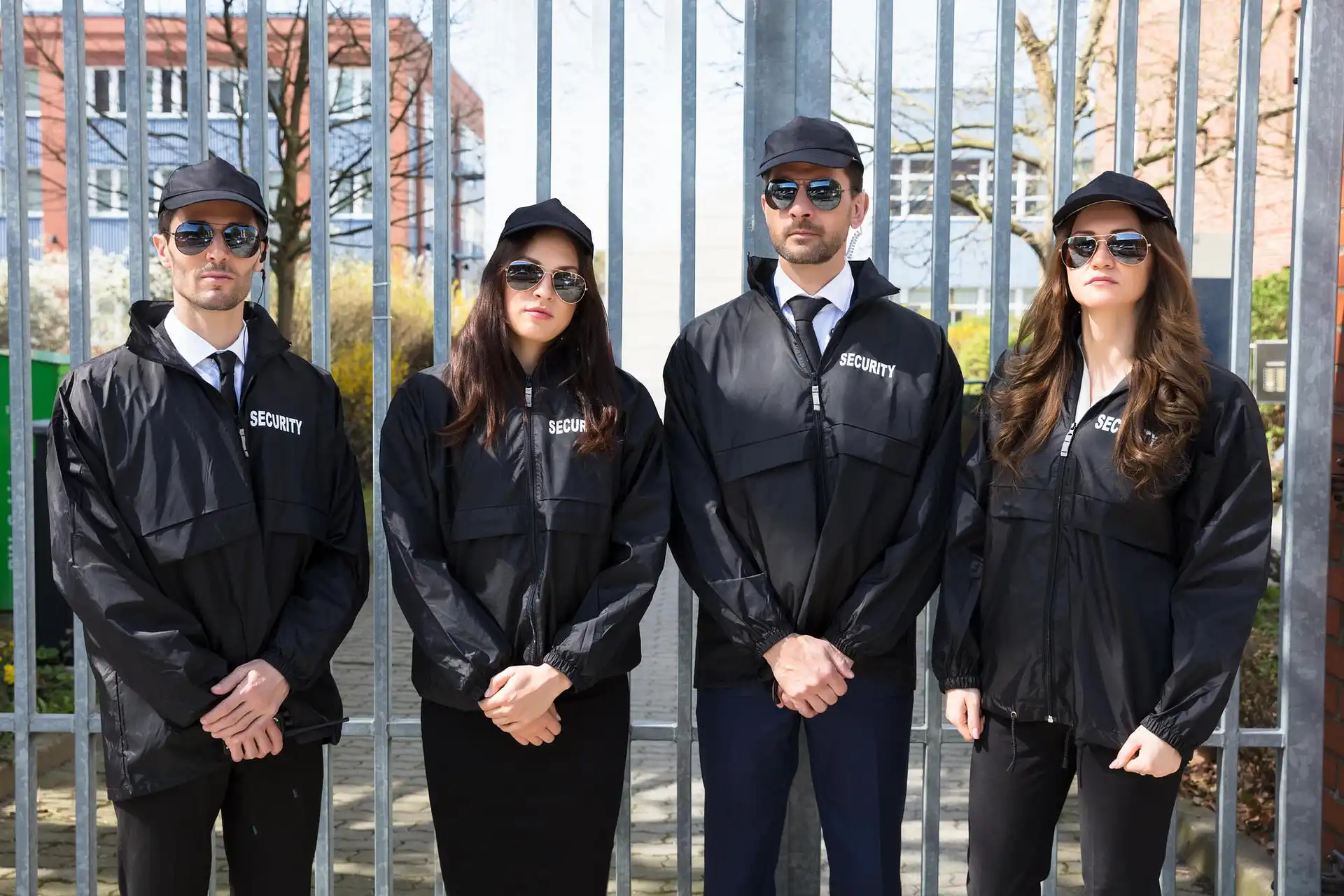
A static guard is a licensed security officer who is posted to one site for an agreed shift. They might check vehicles at a gatehouse, walk a building site's perimeter or stand at a shopping centre entry. The value is presence: someone is always there, so problems are seen and dealt with as they happen. You can read more about how this works on our static security guards page.
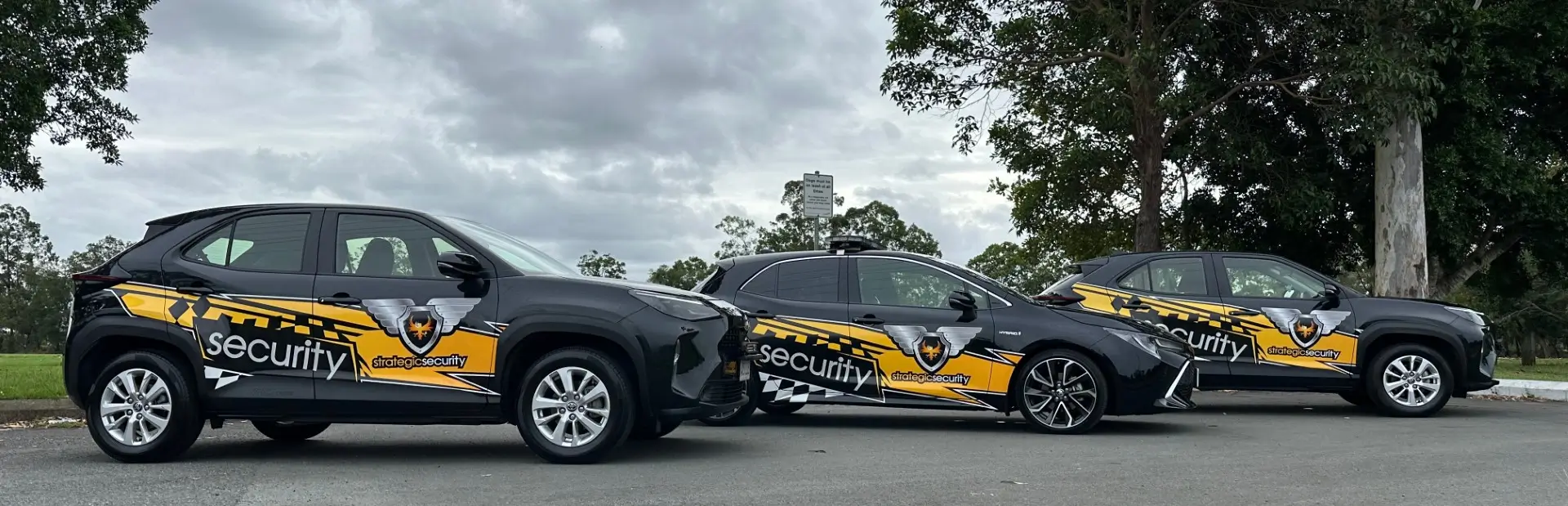
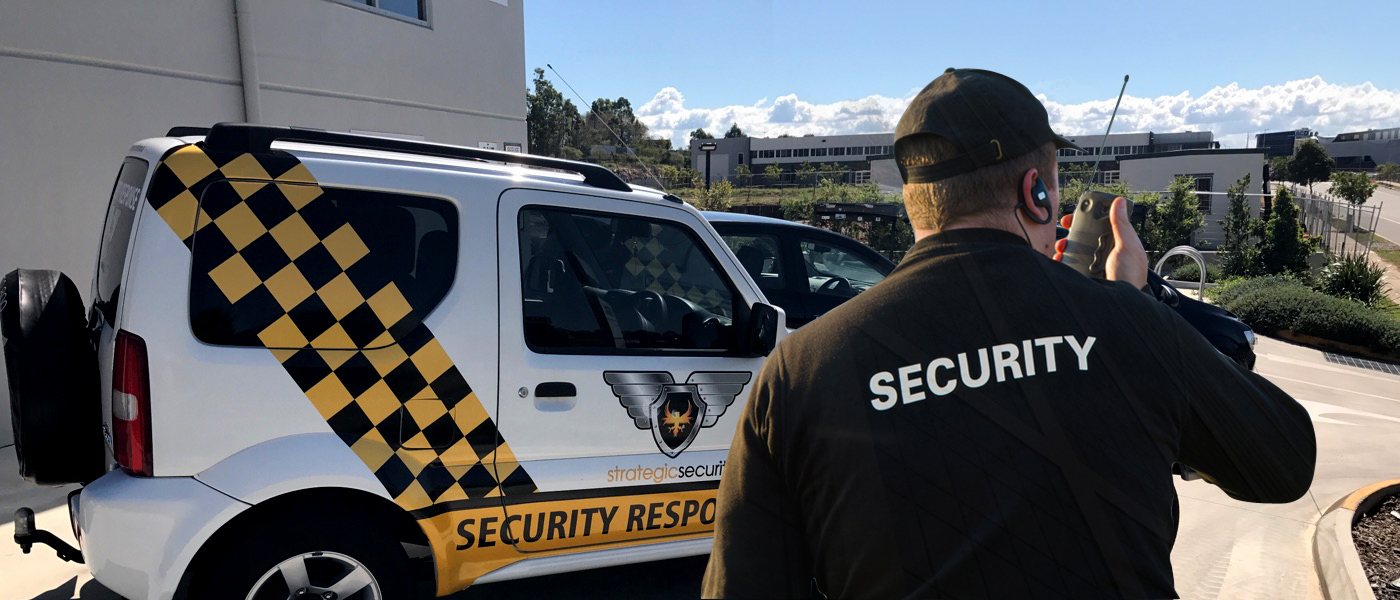
A mobile patrol is a licensed officer in a marked vehicle who visits a number of sites on a route. Each visit might be a quick external check of gates and fences, a full lock-up of a building, an internal walk-through, or a combination — and visits can be timed randomly so nobody can predict when the car will turn up. The value is coverage across the night for a fraction of the hours a full shift takes. See how our mobile patrols are planned and reported.
Both roles are regulated in the same way. In Queensland, security officers who guard, patrol or watch another person's property must hold a security officer licence under the Security Providers Act 1993, and the business supplying them must hold a security firm licence. Whichever option you choose, ask for licence details — you can check a security licence on the Queensland Government register yourself.
Mobile patrol vs static guard: side by side
| Static guard | Mobile patrol | |
|---|---|---|
| Presence | Constant for the whole shift | Visits at set or random times |
| Deterrence | High — an officer is always visible | Good — marked vehicle and unpredictable timing |
| Response to an incident | Immediate, on site | At the next visit, or when dispatched to an alarm |
| Access control and deliveries | Yes — gates, sign-in, contractor checks | Limited to lock-ups, unlocks and checks |
| How cost is worked out | Hours on site | Number of visits and what each visit includes |
| Reporting | Shift log and incident reports | Time-stamped visit records and incident reports |
| Best suited to | High-value, high-risk or busy sites | Lower-risk sites, or the gaps between guarded shifts |
| Main weak spot | Cost over long periods | The time between visits |
When does a static guard make sense?
A static guard earns their keep when the cost of something going wrong between patrol visits is high, or when the site needs a person to make decisions in real time. That usually means one or more of the following:
- There is a lot on site that can be driven away quickly — plant, copper, appliances waiting for installation, vehicles or stock.
- People need to be let in and kept out. Gate control for deliveries and contractors, sign-in for visitors, or checking passes at a building entry all need someone in position.
- There is a current, known threat. After a break-in, the first few nights are often the riskiest, because whoever got in knows what is left.
- The public is on site. Shopping centres, events and busy foyers need someone who can help, observe and step in before a situation escalates.
- The site cannot be locked up properly — open-sided structures, temporary fencing, or a building that is half finished.
When are mobile patrols the better choice?
Patrols work best where the site's physical security does most of the job and you need someone to confirm everything is as it should be. Strong fencing, good lighting, a monitored alarm and locked buildings mean a patrol officer can check a site thoroughly in a short visit. Typical examples are body corporate car parks and common areas, warehouses and workshops in established industrial estates, retail strips after closing, schools and sporting clubs over the holidays, and vacant properties waiting for sale or redevelopment.
Random timing matters more than people expect. A guard who arrives at exactly 11pm every night is easy to work around; visits that vary from night to night are not. Ask any provider how visits are scheduled and how you will see proof they happened — GPS tracking and time-stamped records should be standard.
How does this play out on real types of site?
Construction sites
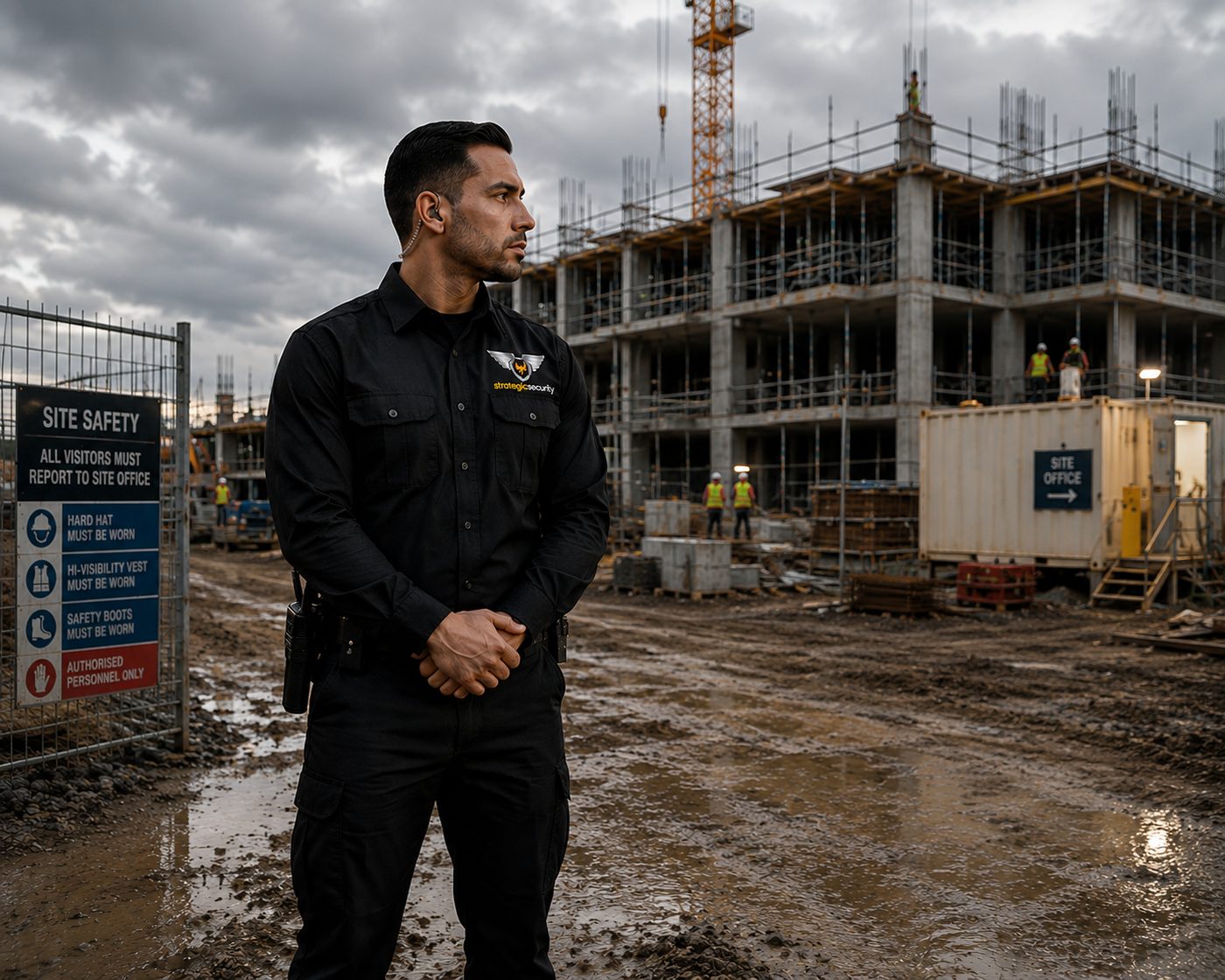
Builders often need both. Early earthworks with little on site may only need patrols, but the stages where materials, fittings and plant are stored — and the Christmas shutdown — usually justify a static guard at the riskiest times. Queensland's Work Health and Safety Regulation also requires whoever manages or controls a construction workplace to secure it from unauthorised access so far as is reasonably practicable, taking into account how close it is to places children visit, such as schools, parks and shops. Our construction site security page explains how we combine the two.
Retail stores and shopping centres
During trading hours, a uniformed officer deters theft and supports staff in a way no patrol can. Once the doors close, the job changes: lock-up checks, a random visit or two overnight and an officer attending if the alarm goes off. That day-and-night split is the backbone of most retail and shopping centre security plans.
Strata and body corporates
Apartment and townhouse complexes rarely need a guard all night. Patrols that check car parks, pools, bin rooms and common doors — and move on people who should not be there — usually give committees the visibility they want at a cost owners can support.
Industrial yards and warehouses
Fenced, lit yards with an alarm suit patrols and alarm response. Yards with open boundaries, high-value stock in the open or frequent after-hours deliveries may need a static guard, at least on weekends.
Car yards and dealerships
Stock sits outside every night. Random patrols, lock-up checks and fast alarm response are the usual starting point, with a static guard added after an incident or over long weekends.
What about alarm response — the third option?
If your site has a monitored alarm, alarm response is often the missing piece. When the alarm activates, an officer is dispatched to check the site, secure it if needed and report what was found — so you or your staff are not driving out alone at 2am to find out whether it was a possum or a break-in. Our target response is around 30 minutes, although distance, traffic and weather always matter. Alarm response pairs naturally with patrols: the patrol provides random checks and lock-ups, and the alarm brings an officer back whenever something triggers between visits.
Can you combine patrols and a static guard?
Yes, and for many sites this is where the real value is. A hybrid plan puts a static guard on site only for the hours that carry the most risk and uses patrols and alarm response for the rest. Common patterns include:
- A static guard from Friday evening to Monday morning, with patrols on weeknights.
- Patrols for most of the year, stepping up to a static guard over the Christmas shutdown or school holidays.
- A guard during trading or delivery hours, with patrols and alarm response after closing.
- A guard for the first few nights after a break-in, then back to patrols once repairs are done.
Because there is no lock-in contract with us, you can move between these patterns as the risk changes — scaling up for a high-risk stage and back down again afterwards.
What drives the cost of each option?
We do not publish price lists, because two sites that look similar on paper can need very different cover. These are the factors that shape a quote:
- Hours versus visits. A static guard is priced on hours on site; patrols are priced on the number of visits and what each visit includes.
- When the cover is needed. Nights, weekends and public holidays attract award penalty rates for officers, which is why Christmas and New Year cover costs more per hour than a weekday.
- Duties per visit. A drive-by check of gates takes minutes; unlocking, walking through a building and locking up again takes longer.
- Site size and travel. Large sites take longer to check, and sites that sit on an existing patrol route are usually more efficient to add.
- Reporting and special requirements. Specific site instructions, keyholder procedures or extra reporting all add time.
A quick checklist to help you decide
- What is the worst thing that could realistically happen on a quiet night — and what would it cost?
- Is there anything on site that could be loaded into a ute and gone in ten minutes?
- Does anyone need to be let in, signed in or turned away while you are closed?
- Are your fencing, lighting and alarm good enough that a short check would spot a problem?
- Has the site, or a similar site nearby, had incidents recently?
- Who attends when your alarm goes off right now?
- Do you have legal duties to keep people out — for example, a construction site near a school, park or shopping precinct?
How to read your answers: if you answered yes to questions 2, 3 or 7, start the conversation with a static guard for the riskiest hours. If most of your answers point to a well-secured, lower-risk site, patrols plus alarm response will usually do the job — and you can always add a guard later.
How we help you choose
Every plan we write starts with a free site assessment. We look at access points, lighting, the alarm set-up and the site's history, then recommend the mix of static guards, patrols and alarm response that fits the risk and the budget. Patrol vehicles are GPS-tracked, visits are time-stamped, and every shift is backed by our 24/7 control room at 54–56 Meadowview Drive, Morayfield. We run patrols across Brisbane, Moreton Bay and Caboolture, Ipswich and the coasts, and every officer we roster is licensed for the role and police-checked.
Weighing up a guard against patrols? Call 1300 792 800 or request a quote below, and we will tell you honestly which option we would choose if it were our site.
Sources & further reading
- Queensland Government — What unarmed security officers do
- Queensland Government — Check a security licence
- Queensland Legislation — Work Health and Safety Regulation 2011 (section 298, security of workplace)
Rules and fees change from time to time — always check the official source before relying on them.